What the report finds
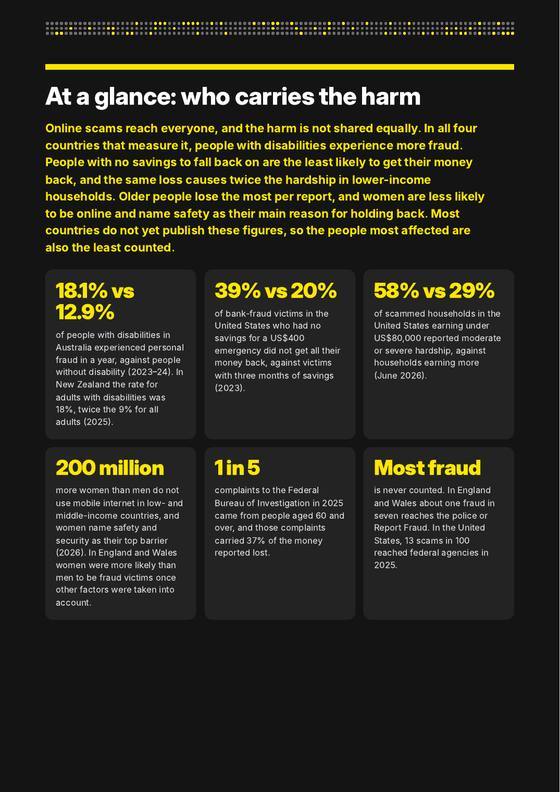
The people most affected are also the least counted. Most fraud agencies do not publish losses by disability, sex, income or language, so the cost is counted by the people who lose the money and by their banks, police and health services.
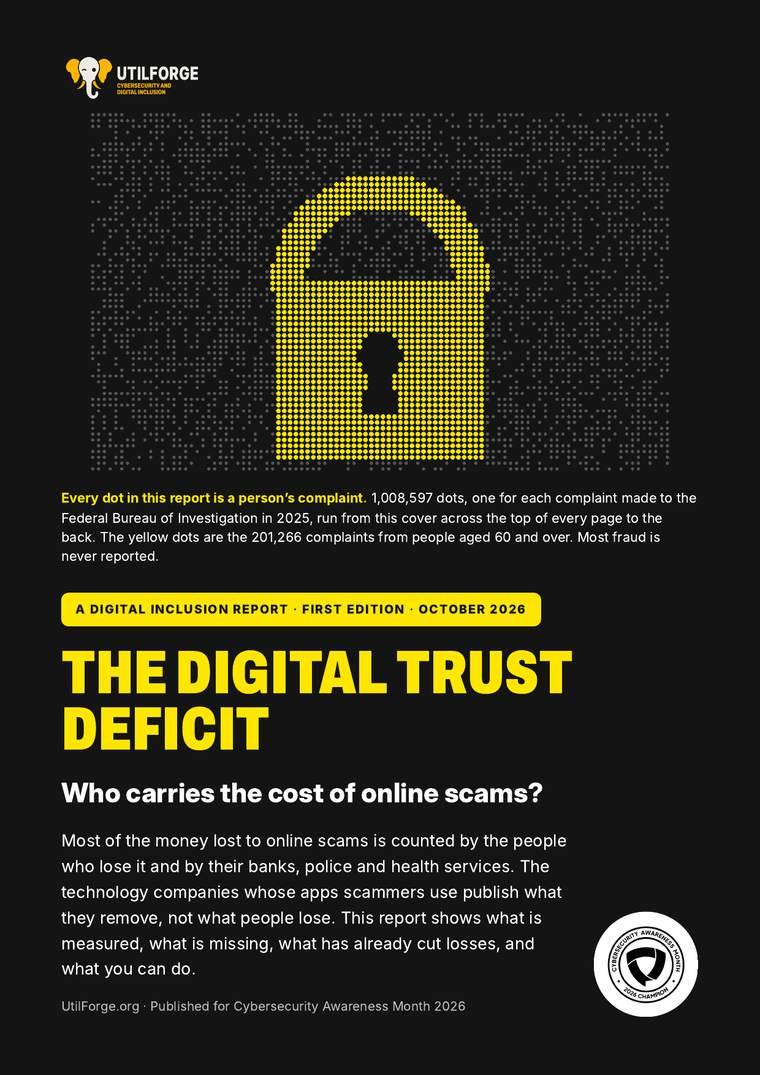
Every dot in the report is a person’s complaint. 1,008,597 dots, one for each complaint made to the Federal Bureau of Investigation in 2025, run from the cover across the top of every page to the back. The yellow dots are the 201,266 complaints from people aged 60 and over. Most fraud is never reported.
Inside the report
- If it has just happened, and what you can do this week
- Why this report
- What is known
- Who is reached, who is protected, who recovers
- Most fraud is never counted
- Who carries the cost, and what changes it
- What platforms publish, and what others found
- Around the world: institutions in their own words
- Charities, libraries and journalists
- Twelve changes that would help
- Find your place
- How to read the figures, and how this report was made
If it has just happened
Stop all contact. Call your bank on the number printed on your card. Report the scam and say where it began. The first-hour guide puts the steps in order for your country, and the official help page lists where to report in 33 countries and territories.
Free checks that go with the report
- Is this a scam text? and Before you pay
- Is this advert a scam?, for search and social media adverts
- Is this the official government site?
- Family safe word
- How to Become Safer Online, the free large-print book
Press release
Read the launch release, distributed by EIN Presswire on 26 October 2026: New report finds people with disabilities, people without savings and older people bear greater harm from online scams. Journalists will find the release, images and contact details on the press page.
Quote it, share it, build on it
The report is published under the Creative Commons Attribution 4.0 International licence: share it, quote it and build on it, with credit to UtilForge.org. Spokesperson and media contact: Lindsay McDonald, lindsay@utilforge.org. Journalists and researchers can write to her for the source table behind any figure.
Corrections
Every correction will be listed here with its date. Send corrections to Lindsay McDonald at lindsay@utilforge.org. UtilForge.org plans to update the report as new data and new laws arrive.
No corrections yet. First edition published 26 October 2026.